Monday, February 9, 2009

What are we doing today?

Week Three Agenda -- Feb. 9 - 13
  • Monday -- Murnau's Nosferatu
  • Tuesday --Murnau's Nosferatu / discussion of film images
  • Wed. -- The Gothic tradition in literature
  • Thursday -- Polidori's "The Vampyre"
  • Friday -- Polidori's "The Vampyre"

Friday, January 30, 2009

What Are We Doing Today?

Monday, Feb. 2 -- Share homework -- jigsaw reading on Mythological vampires
  • Tuesday, Feb. 3 -- finish share vampire mythology, McNally Ch. 10
  • Wednesday, Feb. 4 -- Discuss McNally ch. 10
  • Thursday, Feb. 5 -- McNally ch. 3 "The Historical Dracula"
  • Friday, Feb. 6 -- Discussion; Attendance&Participation checks
  • Saturday, January 24, 2009

    Week One -- January 27 - 30

    What are we doing this week?

    Tuesday, Jan. 27 - Course Guidelines, Info Forms, Goals Pages
    **You need a notebook for this course. Bring it ASAP.

    Wednesday, Jan 28 -- Collect Goals Pgs., Vampire Characteristics Brainstorm

    Thursday, Jan. 29 -- Vampire Folklore and Myth Video (A&E)

    Friday, Jan. 30 -- Finish video & Journal Entry, Read cultural folklore chapter HW
    (Assignment Journal on Cultural Folklore due on Monday)

    Sunday, January 18, 2009

    Finalized Course Guidelines -- Quarter Three -- 2008-09

    The Vampire Image in Fiction and Film
    Q3 - 2008-2009 -- Period Three

    In this class, students will study portrayals of the vampire image in folklore, fiction, and film. Students will have the opportunity to explore the cultural, mythological, and historical origins of this popular and long-lasting persona and why this image is so appealing. Students will delve into the literary roots of the vampire by reading and discussing elements of the European Gothic tradition starting with Polidori's "The Vampyre." As a class, students will closely analyze Bram Stoker's Dracula, focusing on themes, character development, and the historical context of the novel's entry into the literary canon. To visually complement the themes and images presented in the written texts, students will view Murnau's 1922 Nosferatu, Ford Coppola's 1992 film version of Bram Stoker's Dracula, and if time permits--Merhige's The Shadow of the Vampire. Other film clips will also be used to study the various portrayals of the vampire in the last century.

    General Class Requirements:

    Warning: this class requires a large amount of reading with required homework.

    • Each student will be required to read and analyze Bram Stoker's Dracula in small and full group discussions. Reading on schedule and participation in group projects/discussions is required to earn credit. Individual and group work will consist of standard literary analyses, vocabulary work, reader response discussions, and creative assignments. Although some reading days will be scheduled, it is expected that students complete the majority of their novel reading outside of class time. Please plan accordingly.
    • Students are expected to read and respond to short stories, folklore samples, and historical context chapters on the gothic tradition and vampire image.
    • The class will also have the opportunity to analyze the genre through contemporary film. Response journals and discussions in reaction to the story, production, characterization, or other film characteristics will be required.
    • Respectful and appropriate use of class time is expected from all students on all days. Any students who disrespect their classmates/instructors, quiet film viewing, silent reading time, or focused discussion sessions will simply be marked absent for the class period.

    Evaluation Breakdown:

    Students will be assessed on :
    Attendance and Consistent Participation – 20%
    Dracula Quizzes and Final Individual Project – 40%
    Group Work / Reading Roles – 20% (group members have input on this assessment)
    Journal Entries & Other Assignments – 20%

    Missing and Late Work:

    * This is considered a college-prep. class; guidelines and work load are established accordingly. Assignment due dates must be firm. Students will lose 25% of an assignment value for each day it is late. If a student has a FT or a partial day absence, they are still responsible for meeting assignment due dates. (The only exceptions to this guideline may occur for students with documented special education writing concerns. Those students must have a dialogue with me about those concerns in the first week of the course. Permission for extensions must be in line with a student’s IEP and requested in advance of the due dates.)

    * All students are responsible for knowing the due dates on assignments. Look at your assignment handouts, the whiteboard reminders, and the class online site. Ask a classmate.


    Attendance Requirements:
    * If you are absent, you are still responsible for what you missed in class. Ask a fellow classmate what was done the day before and check the assignment basket for handouts or assignments.

    * The Shabazz attendance policy will be strictly enforced in this class. Students will be dropped after their 6th absence. Remember that all tardies are accounted for (3 tardies = 1 absence). If an emergency arises, inform Denise and the office immediately.

    Book Returns:

    Students must return all books and materials checked out for class to be eligible for credit. If a book is lost, talk with Denise about where you can find a replacement copy or arrange for payment of the text.


    Tentative Quarter Outline

    Week One January 27 – 30 (4 days)
    Introduction to Course / Brainstorm on Vampire Image / Vampire Folklore and
    Myth (video)

    Week Two February 2 - 6
    Vampire Folklore / Creative Vamp Project / Historical Vampires

    Week Three February 9 - 13
    View Murnau's Nosferatu / The Gothic Tradition / Polidori's "The Vampyre"

    Week Four February 16 - 20
    Discuss Polidori’s Vampyre / Historical Context of Stoker’s Dracula / Begin Dracula Reading, Group Work, and Discussions

    Week Five February 23 – 27 (3)
    Mid-Q Reports / Parent Confs / SWEIO Reading and Dracula Groups

    Week Six March 2 - 6
    Dracula Groups and Discussions / Quiz #1

    Week Seven March 9 - 13
    Dracula Groups and Discussions / Quiz #2

    Week Eight March 16 – 20 (4)
    Finish Dracula / Quiz #3 / Individ. Projects

    Week Nine March 23 - 26
    View Bram Stoker’s Dracula (Coppola)

    Friday, November 21, 2008

    A Few Comments on Video Vamps

    Here is a timely story from the New York Times on vampire images in film -- prompted by the release of the adaptation of Stephanie Meyer's Twilight.

    Monday, November 3, 2008

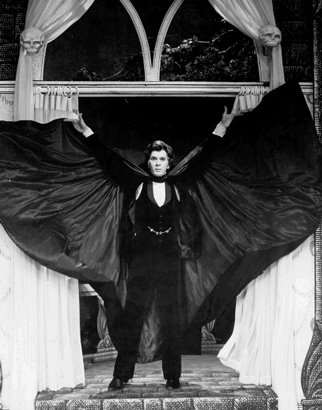
    Image Source: Mascetti, Manuela Dunn. Vampire: The Complete Guide to the World of the Undead. New York: Viking, 1992.

    Tentative Course Guidelines

    The Vampire Image in Fiction and Film

    Tentatively Planned for Quarter Three 2008-09

    In this class, students will study portrayals of the vampire image in folklore, fiction, and film. Students will have the opportunity to explore the cultural and historical origins of this popular and long-lasting persona and why this image is so appealing. Students will delve into the literary roots of the vampire by reading and discussing elements of the European Gothic tradition. We’ll begin this exploration with Polidori’s The Vampyre. As a class, students will closely analyze Bram Stoker’s Dracula, focusing on themes, character development, and the historical context of the novel’s entry into the literary canon. To visually complement the themes and images presented in the written texts, students will view Murnau’s 1922 Nosferatu, Ford Coppola’s 1992 film version of Bram Stoker’s Dracula, and if time permits—Merhige’s The Shadow of the Vampire. Other film clips may be used to study the various portrayals of the vampire in the last century.

    General Class Requirements

    Warning: this class requires a large amount of reading with required homework.

    Each student will be required to read and analyze Bram Stoker’s Dracula in small and full group discussions. Reading on schedule and participation in group projects/discussions is required to earn credit. Individual and group work will consist of standard literary analyses, reader response discussions, creative assignments, and possibly a mini-presentation to the entire class. Although some reading days will be scheduled, it is expected that students complete the majority of their novel reading outside of class time. Please plan accordingly.

    Short stories, historical context chapters, and essays on the horror genre and vampire image will be read as a group. Students may need to read and respond to these pieces as homework.

    The class will also have the opportunity to analyze the genre through contemporary film. Response journals and discussions in reaction to the story, production, characterization, or other film characteristics will be required.

    Creative projects also will be assigned throughout the quarter. (For example, during the first week of the quarter we will create the image of the vampire we already hold in our minds.) We may also try our hands at producing our own Gothic characters and stories later in the quarter if time permits. Students will have choices in how to articulate their own vampire personas.

    Respectful and appropriate use of class time is expected from all students on all days. Any students who disrespect their classmates/instructors, quiet film viewing, silent reading time, or focused discussion sessions will simply be marked absent for the class period.

    Missing and Late Work:

    Students must complete all assignments in this course to be eligible for credit.

    Students will have a short grace period following each major assignment due date to allow for unanticipated emergencies and time constraints. Missing a due date will also generate a contact home (either email or phone call) to update families of outstanding assignment obligations and determine if additional support is needed. If students miss the grace period deadline, they might lose eligibility for class credit. Grace period length will vary by class and assignment. Students must pay attention to each assignment’s dates. Students are expected to participate in sharing sessions and may not use those days for writing or project work time.

    All students are responsible for knowing the due dates on assignments. Look at your assignment handouts and the whiteboard reminders. Ask a classmate.

    Attendance Requirements:

    If you are absent, you are still responsible for what you missed in class. Ask a fellow classmate what was done the day before and check the assignment basket for handouts or assignments.

    The Shabazz attendance policy will be strictly enforced in this class. Students will be dropped after their 6th absence. Remember that all tardies are accounted for (3 tardies = 1 absence). No make-up time opportunities will be given. (If an emergency arises, inform Denise and the office immediately.)

    Book Returns:

    Students must return all books checked out for class to be eligible for credit. If a book is lost, talk with Denise about where you can find a replacement copy or arrange for payment of the text.

    Tentative Quarter Outline:

    Week One: Intro to Course / Brainstorm on Vampire Image / Vampire Folklore and Myth

    Week Two: Folklore / Creative Vamp Project / The Comedic X-File Vampire / Historical Vampires

    Week Three: View Murnau’s Nosferatu / The Gothic Tradition / Polidori’s “The Vampyre”

    Week Four: Discuss Polidori’s Vampyre / Historical Context of Stoker’s Dracula / Begin Dracula Reading, Group Work, and Discussions

    Week Five: Mid-Q Reports / Dracula Groups

    Week Six: Dracula Groups and Discussions

    Week Seven: Dracula Groups and Discussions / Projects

    Week Eight: Finish Dracula / Hollywood’s Influences

    Week Nine: View Bram Stoker’s Dracula (Coppola)

    Week Ten: View Shadow of the Vampire (Merhige)